
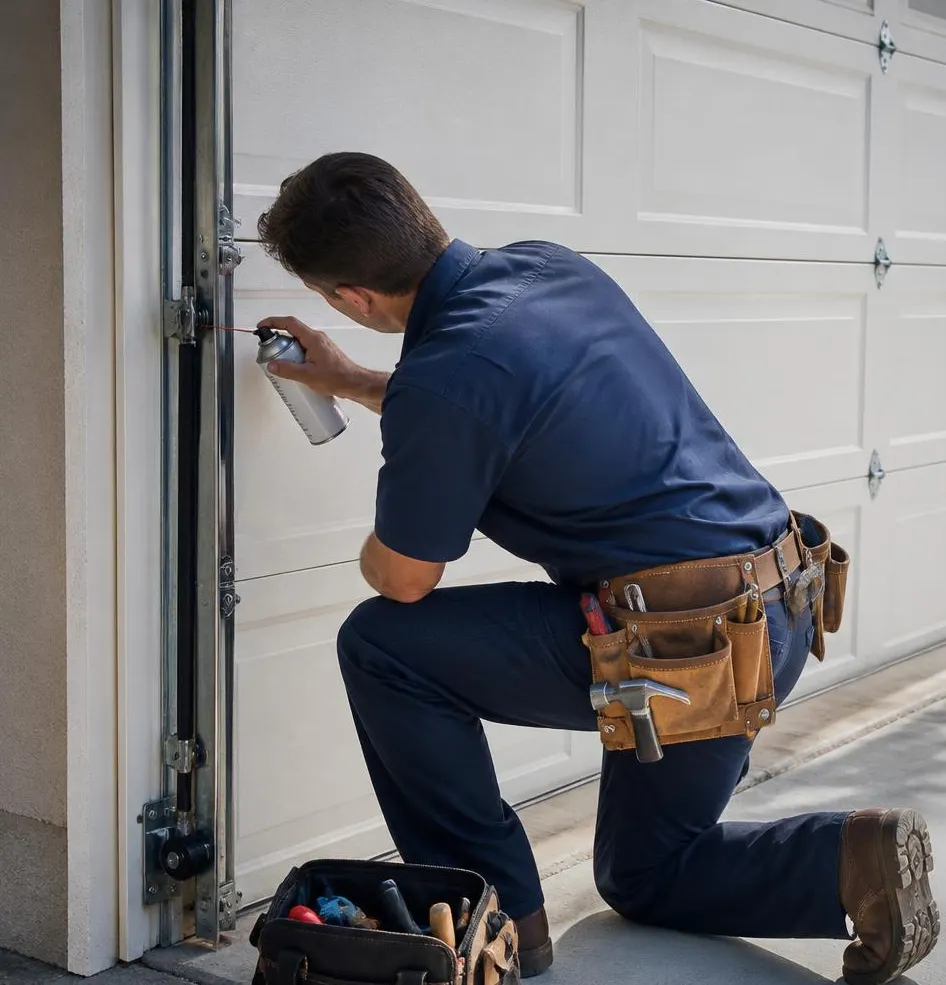
A tech gets called out after a break-in and the homeowner is confused because the garage door looked fine, the opener still worked, and nothing was pried or dented. Then the tech finds it: a coat hanger or a stiff wire, bent into a hook, still wedged near the top seal where someone fished it through the gap and yanked the emergency release cord. No broken glass, no forced lock, no alarm triggered. Just a $2 piece of wire and thirty seconds. This is one of the most common entry methods techs see on service calls in this area, and most homeowners have no idea it's possible until it happens to them.
The Weak Point Most Homeowners Never Check
Every garage door opener has a manual release cord so you can open the door by hand during a power outage. On many installations, that cord hangs close enough to the top of the door that a wire pushed through the small gap between the door and the frame can snag it and pull. Once the release disengages, the door rolls up freely, even with the opener locked. This trick works on older installations where the cord wasn't shortened or shielded, and it's especially common on doors that have sagged slightly or warped from humidity, since warping widens the gap at the top.
How to close this gap
- Zip-tie the release lever: A simple loop of zip tie through the release hole prevents the lever from disengaging from an outside pull, but still lets you snap it with your hand from inside.
- Shorten or redirect the cord so it's out of reach from the gap.
- Install a shield or cover over the release mechanism, available as an inexpensive add-on part.
Forcing the Door Open
The second most common method is brute force: prying the bottom of the door up and sliding under, or shaking the door hard enough to pop it off a weakened track. This works far more easily than it should when a door has existing problems — a bent track from storm debris, a worn roller, or a spring that's lost tension and no longer holds the door firmly shut. A door in good working order with a properly adjusted opener lock resists this kind of force. A door that's already been limping along with a squeak or a lean gives way much faster, and burglars test for exactly that kind of give before committing.
Salt air and humidity accelerate this weakness by corroding springs, hinges, and track hardware faster than they would further inland. A track that's rusted at the mounting brackets flexes more under pressure, which is exactly the vulnerability a forced entry attempt exploits.
The Garage Window Shortcut
Doors with decorative window panels are popular, but a small pane of glass near the top is an easy target. Break it, reach in, hit the wall-mounted opener button, and the door goes right up. This is a quiet, fast method that doesn't require touching the release cord at all. Frosted or tinted security film over garage windows blocks the view inside and makes it harder to locate the button by sight, and relocating the wall control out of reach of a broken window closes the gap entirely.
Habits That Quietly Create Opportunity
A few everyday habits make all of the above much easier for someone casing a property:
- Cracking the garage door for airflow on hot, humid days. It feels harmless, but even a few inches of gap gives easy visual access to the interior and sometimes direct access to the release cord or wall button. Ventilate with a vent fan or by propping the service door instead.
- Leaving the remote clipped to the visor in a car parked in the driveway. A quick smash-and-grab from the car gets someone the remote without ever touching the house.
- Letting a damaged door sit unrepaired. A visibly off-track or sagging door signals a house that isn't being maintained closely, which is exactly the kind of target that gets a second look.
Hardware That Actually Stops a Break-In
- A rolling-code opener if the current one is older than about 10–15 years; fixed-code remotes can still be cloned with inexpensive tools.
- A manual slide lock or bar on the inside track as a mechanical backup to the opener lock, especially useful during storm season when you want extra assurance the door won't lift in high wind or from tampering.
- Working auto-reverse and lock features confirmed during a routine tune-up — these get knocked out of adjustment more often than people realize, especially after a season of storm-driven temperature and humidity swings.
- Solid tracks and tensioned springs with no visible rust pitting or bent sections, since this is the structural backbone that resists forced entry in the first place.
When to Call North Miami Garage Door Experts
If a door has started sagging, drifting off its track, or the opener lock no longer seems to hold firm, that's a sign the door's physical security has already been weakened, not just a cosmetic issue. Our team handles Off Track Door Repair to get the door seated and tracking correctly again, and we run a full Garage Door Maintenance & Tune-Up to check spring tension, track alignment, opener lock function, and the condition of the release mechanism so nothing on the door is giving an intruder an easy opening. We also install shields and upgraded release hardware on request for homes that want that extra layer closed off permanently.
If your garage door in North Miami, FL has any of these warning signs — a gap at the top, a sag at the bottom, a lock that doesn't quite catch — call North Miami Garage Door Experts for same-day service and get it checked before it becomes someone else's opportunity.